
This is a longer post. Here’s a summary of what you’ll read about as you scroll down:
Statement from Ald. Manaa-Hoppenworth
Our Work
How You Can Help
Resources for People Experiencing Homelessness
Communication & Community Engagement
STATEMENT FROM ALD. MANAA-HOPPENWORTH
In recent years, we have seen more of our neighbors living in tents along the lakefront than at any other time in recent memory. This cannot become our new normal. Our office is committed to an approach that supports our unhoused neighbors while ensuring our parks, beaches, and other public spaces remain safe, welcoming, and accessible for everyone.
Over the last three years, our team alongside DFSS and providers, has helped nearly 200 neighbors transition from lakefront encampments into stable housing by coordinating with the Department of Family and Support Services (DFSS), outreach providers, and All Chicago. All Chicago manages the Coordinated Entry System (CES), the region's centralized process for connecting people experiencing homelessness to housing resources. Through regular outreach, individuals are assessed and entered into CES, where they are prioritized for available housing based on their level of need and vulnerability. Our office ensures resources are allocated to our lakefront to decrease the number of tents in public parks, house those in need, and ensure the correct sanitary operations are targeting the areas that need it most.
We continue to coordinate outreach, advocate for housing placements, monitor encampment conditions, and work with City partners on scheduled cleanups and park maintenance. This work is ongoing, and we remain committed to helping people move indoors while ensuring our parks and lakefront remain accessible to all who enjoy them.
Read more below about how we're supporting neighbors experiencing homelessness and how you can help.
In Community,

Leni Manaa-Hoppenworth
48th Ward Alderwoman
OUR WORK
Our office is committed to supporting unhoused neighbors while keeping our parks safe and accessible for everyone.
THE REPORTING PROCESS
When you report a tent or neighbor in need of assistance to our office, we share the information with the Department of Family and Support Services (DFSS) and the Chicago Park District. From there, DFSS works to get our neighbors to help and resources they need including shelter while the Park District works on enforcement. The Park District evaluates reports of tents and related unsafe behavior on a case by case basis according to their policy which you can review here. Read more about how to effectively report tents and neighbors in needs of assistance in the “How You Can Help” section of this post.
COLLABORATION WITH DFSS
We work with DFSS to provide ongoing outreach as well as concentrated monthly cleanups. The Office of the Inspector General recently conducted an audit to determine the efficacy of DFSS’s homelessness outreach programs finding the department to be largely successful. Read the audit here.
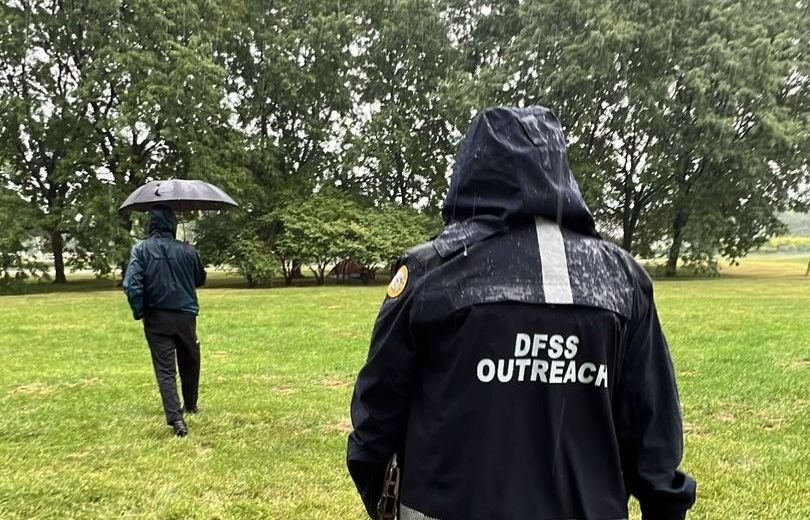
Ongoing Outreach: The DFSS Homeless Services Division coordinates with over 50 community organizations to provide outreach, shelter, housing support, and other vital services to those experiencing or at risk of homelessness. The complexity of homelessness often includes factors such as loss of income, health issues, or family circumstances, and we address these holistically. Our office, in collaboration with DFSS Outreach Teams, engages directly with unhoused individuals, offering services such as temporary shelter and connection to essential resources.
Monthly Cleanups: Our office—in collaboration with the Department of Streets and Sanitation (DSS), Chicago Park District, Chicago Police Department, and DFSS—conducts regular cleanups to maintain the safety and cleanliness of public spaces. During cleanups, abandoned tents and accumulated debris are removed. Unhoused neighbors are given written notice seven days prior to these cleanups. Cleanups are part of a standardized protocol to ensure the health and safety of all residents while respecting the rights of those who are unhoused.
CITY OF CHICAGO FIVE YEAR BLUEPRINT ON HOMELESSNESS
The Mayor’s Office of Homelessness (MOH) is committed to making homelessness rare, brief and non-recurring. In partnership with city agencies, people with lived experience, and community stakeholders, we work to ensure all residents have access to safe, stable and affordable housing. The city worked with residents, service providers and partners to develop a Five-Year Blueprint on Homelessness—a citywide plan grounded in data, community input and lived experience. Now, we are moving into implementation, aligning agencies and partners to carry out this work across Chicago. Read the blueprint here.
PREVIOUS EFFORTS
AMEs: In 2023, our team successfully helped over 60 people in the 48th Ward move from encampments into stable housing through a series of two Accelerated Moving Events (AMEs) at Margate Park. AMEs have proven to be a successful model where city services are brought directly to the neighbors who need them most. An independent study by the Inspector General found that AMEs are successful in housing residents and keeping them housed. AMEs have been successful in clearing large encampments such as the one at Touhy Park. Due to federal funding changes, AMEs are no longer being held. However, we continue to house neighbors through All Chicago.
HOW YOU CAN HELP
Community involvement is essential for keeping our neighborhoods safe, clean, and supported. Here are a few ways you can help:
REPORT NEW TENTS & CLEANUP NEEDS: If you see a new tent or observe abandoned items, email info@the48thward.org to report it. We will send the Homeless Services Outreach Team to offer social services, and/or schedule a cleanup.
ASK FOR HELP: If you or someone you know is facing housing insecurity, call 311 and ask for “Short Term Help” for immediate shelter or rental assistance. DFSS Community Service Centers are available for walk-ins during business hours to provide housing support.
DONATE TO SERVICE PROVIDERS: Consider donating to a local homeless service provider or food bank. These organizations can direct resources where they’re most needed. See a list of service providers in need of donations on our food security resources blog here.
REPORT CRIMINAL ACTIVITY / TRESSPASSING / DRUG USE / HAZARDOUS MATERIALS: If you are the victim of or witness to a crime, report it to the Chicago Police Department by dialing 911. City resources are directly tied to calls for service. CPD recommends that everyone involved call 911 instead of having one person (i.e. building manager) call on their behalf. CPD offers the Criminal Trespass Affidavit and Private Sector Camera Initiative for ongoing concerns. Reach out to 312-742-8770 to learn more and sign up.
LANDLORDS - PARTNER WITH ALL CHICAGO TO FILL EMPTY UNITS: All Chicago is a nonprofit organization that that partners with local, state, and federal agencies to accomplish our shared goal of ending homelessness. They offer targeted emergency funds to fill gaps and work with community partners across the city that help diverse populations. Landlords in the area are encouraged to register with All Chicago to help us increase the rapid rehousing supply on the city's north side, which is currently lacking in available units for vulnerable populations.
RESOURCES FOR PEOPLE EXPERIENCING HOMELESSNESS
211 Metro Chicago: Call 2-1-1 or visit the website for immediate health and social services assistance including food, housing, healthcare, and legal aid.
Greater Chicago Food Despository: Use GCFD’s map to find groceries or a hot meal site near you.
48th Ward SNAP blog: Visit our resource guide for information about SNAP coverage and additional food security resources.
COMMUNICATION & COMMUNITY ENGAGEMENT
Clear communication is crucial for ensuring safety and transparency in addressing homelessness. To stay informed about our efforts, please sign up for our weekly newsletter. We also encourage you to attend our twice monthly ward night meetings and invite our team to come to your building or community meeting to collaborate on hyper-local concerns.
By working together, we can continue to create a neighborhood where all residents feel supported and safe. Thank you for your patience and commitment to these efforts. If you have questions, concerns, or ideas, reach out to us at info@the48thward.org.